Home And Community, Occupational Therapy
7 Big Home Modification Mistakes: Why OT Projects Go Wrong

Home modification projects can be clinically sound and technically compliant yet still miss the outcomes that matter to clients. This evidence-informed article explains how occupational therapists can strengthen collaboration, translate clinical need into buildable information and remain involved from assessment through post-completion evaluation.
Table of Contents
Home modifications are among the most tangible interventions delivered by occupational therapists. They reshape the physical environment to reduce barriers to occupational performance, support independence and enable people to engage more effectively in daily life. The evidence indicates that home modifications can improve accessibility, occupational performance, independence, participation, quality of life and outcomes for family carers, although outcomes vary according to the person, intervention and context. For example, Hutchinson et al.’s (2026) scoping review of 38 peer-reviewed studies involving adults aged 50 years and over identified 16 consumer outcomes and five family carer outcomes, including improved performance of activities of daily living, emotional wellbeing, community access, physical health and reduced carer burden.
Yet despite this evidence, many experienced occupational therapists have encountered projects that fail to deliver the expected outcomes. Recommendations may be clinically sound, funding may be approved and construction may be completed to an acceptable standard, yet clients remain dissatisfied or encounter ongoing barriers.
The more useful question is not simply whether home modifications work, but which modifications work, for whom, under what circumstances and according to whose definition of success.
The answer lies in the complexity of home modification practice itself. Home modifications sit at the intersection of occupational therapy, construction, design, funding systems and client priorities. When clinical intent is lost during design, quoting or construction, the finished modification may be technically compliant but still fail in everyday use.
A shower may be accessible on paper but not support the person’s actual transfer method. Circulation space may be reduced after a product substitution. A grab rail may be installed securely but not where the person can use it effectively. Research and Australian practice guidance suggest that successful home modifications rely not only on good assessment, but also on effective collaboration, clear communication and a shared understanding of what success looks like.
Home Modifications Occupational Therapy Benefits Beyond Safety
Safety is often the primary justification for home modifications, but the benefits extend far beyond falls prevention and risk management. Hutchinson et al. (2026) found that home modifications can improve independence in activities of daily living, reduce fear of falling, improve confidence, support community participation, enhance emotional wellbeing and reduce the burden on family carers. Benefits were reported across occupations including showering, meal preparation, laundry, gardening and leaving the home.
Importantly, these benefits are rarely isolated. A modification that enables safer shower access may also increase privacy, dignity and confidence. Improved confidence may support greater engagement in social or community activities. The occupational outcome is therefore not simply the ability to complete a task, but the broader impact that task has on participation and quality of life.
The review also identified outcomes for family carers, including reduced physical burden, improved safety, better family functioning and greater flexibility. This reinforces an important point for occupational therapists: the impact of a home modification often extends beyond the individual client to the wider household.
At the same time, the evidence challenges us to avoid overly simplistic assumptions. Hutchinson et al. (2026) reported inconsistent findings regarding falls outcomes, with some included studies demonstrating reduced falls or falls risk and others finding no reduction. The review also identified negative experiences associated with stigma and the appearance of modifications. These findings suggest that successful outcomes require more than simply installing a modification. They require consideration of how the intervention influences the person’s daily life, identity and experience of home.
When Professionals and Clients Define Home Modification Success Differently
One of the most interesting findings in the home modification literature is that professionals and clients do not always define success in the same way.
Ainsworth et al. (2025) used an interpretive description approach, interviewing six managers and conducting two focus groups with nine occupational therapists in Queensland. The study identified five outcomes valued by professionals in home modification practice: independence and freedom, safety and health, remaining at home, inclusion and quality of life, and maintaining the look, condition and value of the home. Independence, safety and remaining at home were prioritised most strongly.
These priorities are understandable. They align closely with healthcare objectives, funding requirements and measurable service outcomes. However, Ainsworth et al. (2025) also noted differences between professional priorities and outcomes identified in earlier consumer-focused research. Clients often place considerable importance on dignity, identity, emotional wellbeing, appearance of the home and broader quality-of-life outcomes. The study also highlighted that professional reasoning may be shaped by organisational and funding priorities, particularly where systems emphasise basic needs, efficiency and value for money.
In practice, this means that a bathroom modification may successfully reduce risk and increase independence while still failing to meet the client’s expectations if it looks institutional, disrupts valued routines, reduces privacy or changes the feel of the home. For some clients, the issue is not only whether they can shower safely, but whether they can do so with dignity, without excessive planning and without feeling that their home has become a clinical environment.
The home is more than a physical structure. It is closely linked to identity, belonging and daily routines. Occupational therapists therefore need to explore not only whether a modification is safe and functional, but what the client wants the modification to make possible in everyday life.
Person-centred practice requires us to recognise that independence and safety are not necessarily the end goal. They are often the means through which clients pursue participation, autonomy and quality of life.
Home Modifications Occupational Therapy Is a Design and Construction Process
Home modifications are frequently discussed as clinical interventions, yet Russell et al. (2018) conceptualised them as design and construction processes. Their UK survey of 135 occupational therapists informed a four-phase, nine-subphase protocol extending from assessment and occupational performance analysis through to design, procurement, construction and post-completion evaluation.
This process perspective challenges the assumption that the occupational therapist’s role largely concludes once recommendations have been written. Russell et al. (2018) argued that successful outcomes depend on coordinated information flow, clear professional roles, client involvement and continuing attention to whether the built solution achieves the intended occupational outcome.
The authors identified challenges that closely mirror those encountered in practice today. Different professionals may have incomplete understanding of each other’s roles. Information may be lost as projects move from assessment to quote, drawing, approval and construction. Decisions made during design or construction may alter the intended functional outcome. Clients may also struggle to appreciate the implications of technical decisions made earlier in the process.
Understanding home modification as a process rather than a single recommendation changes how occupational therapists approach their role. Assessment remains essential, but it sits within a broader collaborative process focused on achieving meaningful occupational outcomes.
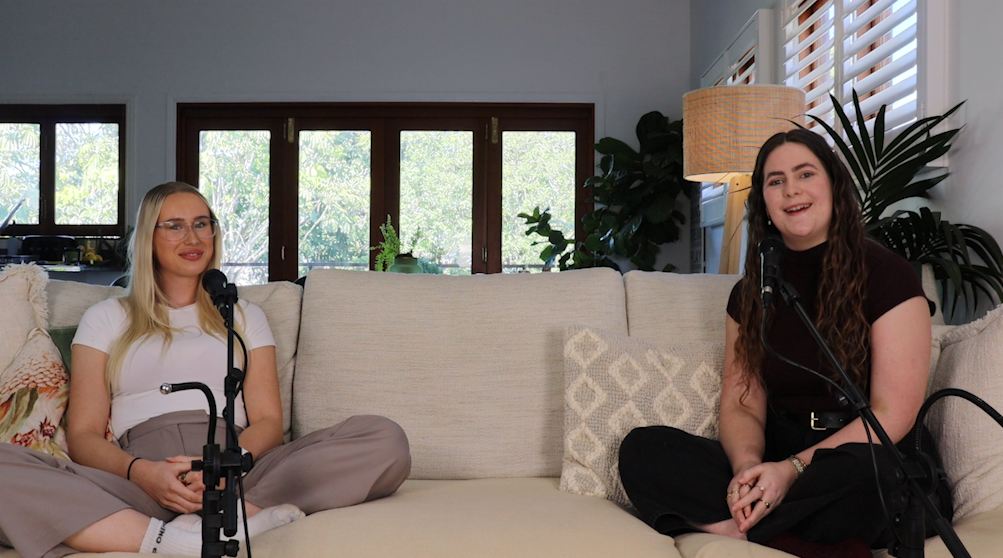
Want to hear both sides of the process? In this related episode of The OT Download, occupational therapists and a building designer explore where disability home modifications can go wrong between the initial report and the finished build. The conversation covers buildability, existing-home constraints and how stronger collaboration can help turn functional requirements into practical outcomes.
Clinical Need Must Be Translated Into Buildable Information
One important reason home modification projects encounter difficulties is the gap between clinical reasoning and construction implementation.
Occupational therapists are experts in occupational performance, participation and environmental barriers. Builders and designers possess expertise in construction methods, compliance requirements, structural limitations and feasibility. Neither discipline can achieve optimal outcomes in isolation.
Russell et al. (2018) emphasised the importance of documenting detailed person, environment and task requirements during planning. The purpose is not simply to identify a preferred solution, but to communicate the functional outcome that the design must achieve.
The NDIS Home Modifications: Guidance for Builders and Designers (National Disability Insurance Agency [NDIA], 2022) provides a practical example of this distinction in the Australian NDIS context. The guidance is operational rather than peer-reviewed research, and is intended to help builders, designers, home modification assessors and other stakeholders understand typical scopes of work, funding criteria and items that may fall outside those criteria. For bathroom modifications, occupational therapists identify clinical requirements, while builders address construction considerations such as waterproofing, drainage, structural supports, plumbing, floor gradients and certification. Similarly, for access modifications, assessors identify functional requirements while builders determine how those requirements can be safely and compliantly achieved.
A recommendation such as “install an accessible shower” may appear straightforward, yet it provides limited information about the client’s specific needs. Builders need to understand how the person transfers, whether carers assist, what equipment is used, how much manoeuvring space is required and which design elements are essential to safe performance.
The strongest reports distinguish between:
- the occupational outcome to be achieved;
- the design requirements necessary to support that outcome; and
- the construction solution through which those requirements will be delivered.
This approach allows occupational therapists to maintain control over functional outcomes while enabling builders to contribute technical expertise. It also creates flexibility when unforeseen site constraints emerge and alternative solutions must be considered.
For further practical guidance, refer to the NDIS Home Modifications: Guidance for Builders and Designers. This official resource provides information for builders, designers, home modification assessors and other stakeholders involved in planning and delivering NDIS home modifications. Read the official NDIS guidance here →
Funding, Feasibility and Constructability in Home Modifications
Even when a recommendation is clinically appropriate, it may not be achievable in its original form.
The 2022 NDIS guidance highlights the reality that NDIS-funded modifications occur within existing dwellings that contain structural limitations, service constraints, compliance requirements and funding restrictions. The guidance also makes clear that some features may fall outside NDIS funding criteria, while participants may choose to separately fund items or finishes that still achieve an equivalent outcome.
Ainsworth et al. (2025) found that organisational and funding priorities appear to influence professional decision-making. This reinforces the need to balance person-centred practice with practical realities, particularly in systems that emphasise efficiency, value for money and basic functional needs.
Feasibility assessment is therefore not an administrative step at the end of clinical reasoning. It is part of the reasoning process. Early involvement of builders, designers or building practitioners can identify potential challenges before clients become committed to a specific solution. Structural constraints, plumbing requirements, drainage issues, door swing, product availability or compliance considerations may all affect whether a proposed design can achieve the intended occupational outcome.
Rather than viewing these factors as barriers, they should be understood as part of an iterative design process. The objective is not necessarily to protect a particular recommendation. It is to achieve the best possible occupational outcome within the constraints of the home, the funding system and the construction environment.
Why OT Involvement Should Continue Beyond Recommendation Writing
The literature suggests that occupational therapist involvement should not end when recommendations are approved.
Russell et al. (2018) describe occupational therapists remaining involved during implementation through site visits, consultation with builders, clarification of functional requirements and support when design decisions change during construction.
This continued involvement is important because modifications may evolve as construction progresses. Site conditions may differ from expectations, products may become unavailable and design adjustments may be required. Changes that appear minor from a construction perspective can sometimes have significant functional implications, such as a small change in shower screen position affecting transfer space or a substituted fitting altering reach requirements.
The NDIS guidance also recognises implementation, monitoring and review as important stages of the home modification process. Complex projects, in particular, can significantly affect participants while construction is underway and require careful coordination between stakeholders.
Post-completion evaluation is equally important. Construction completion and occupational success are not synonymous. A modification may be technically compliant and professionally installed yet still fail to support participation as intended.
Occupational therapists have an important role in evaluating whether the completed modification supports the intended occupational outcomes. Has independence improved? Has participation increased? Have barriers been reduced? Does the client view the outcome as successful?
These questions ultimately matter more than whether the project was delivered exactly as originally specified.
Turning Home Modifications Into Meaningful Change
A successful home modification is not defined by approval, funding or construction completion alone. It is successful when the finished environment enables the person to do what matters to them, safely, sustainably and in a way that works within their home.
The evidence suggests that projects are most vulnerable when different stakeholders define success differently, when functional requirements are not translated clearly into design and construction decisions, and when feasibility constraints are identified too late. For OTs, this reinforces the importance of specifying occupational outcomes, communicating person, environment and task requirements clearly, and remaining involved as recommendations become built solutions.
The strongest home modification practice connects occupational therapy reasoning, construction expertise and client priorities. That connection is what turns a technically completed modification into meaningful change in everyday life.
References
Ainsworth, E., Aplin, T., Bennett, S., & de Jonge, D. (2025). Australian occupational therapist and manager perspectives on important home modification outcomes. Health & Social Care in the Community, 2025(1), Article 1405036.
Hutchinson, C., Block, H., Dymmott, A., Gough, C., Laver, K., Walker, R., Xiao, L., & George, S. (2026). Home modification outcomes for adults aged 50 years and over and their relatives: A scoping review. OTJR: Occupational Therapy Journal of Research, 46(3), 539–554.
National Disability Insurance Agency. (2022). NDIS home modifications: Guidance for builders and designers (Version 2.0).
Russell, R., Ormerod, M., & Newton, R. (2018). The development of a design and construction process protocol to support the home modification process delivered by occupational therapists. Journal of Aging Research, 2018, Article 4904379.